



Your truck’s battery does more than start the engine. It also powers essential electronics including dashboard displays and lighting, plus it supports your truck’s charging system. With frequent starts, rough roads, fluctuating temperatures, and higher electrical demands in newer trucks, proper battery maintenance is important in helping you avoid dead starts.
Fortunately, a few simple checks can help you catch problems early and extend your batteries’ lifespan. Here are some semi-truck battery maintenance tips every driver, owner-operator, and fleet manager should know.
6 Tips to Make Your Truck Battery Last Longer
1. Inspect Battery Connections and Terminals
Loose connections and corrosion can interfere with the flow of electricity, which makes it harder to start your truck and charge the batteries correctly.
Regularly check your battery terminals and cables for corrosion, dirt, loose connections, and damaged insulation. Use a battery terminal brush or an approved cleaning solution to remove corrosion from the terminals, making sure to follow the battery manufacturer’s safety instructions. Once the connections are clean and dry, consider applying a battery-terminal protectant to help prevent future corrosion.
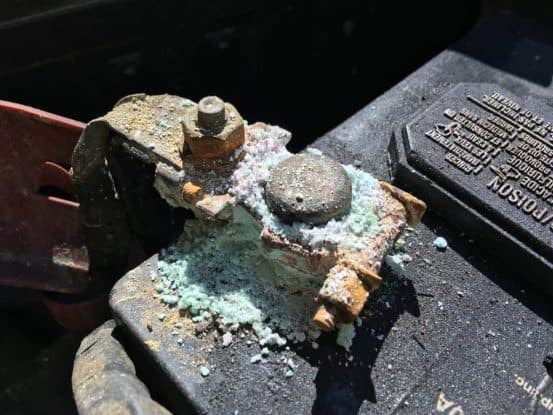
You should also inspect the battery hold-downs. Constant vibration from rough or uneven terrain can loosen mounting hardware and damage the internal components over time. Be sure the batteries are securely mounted and the cables are properly connected.
2. Test Battery Health and Charge Levels
A battery can lose its ability to hold a charge before it fails completely. Regular battery testing helps you diagnose a weak battery before it leaves you stranded. For most batteries, a full charge is 12.6 volts for flooded batteries and 12.8 volts for AGM batteries.
Also, don’t assume that every day driving always fully recharges your batteries. Trucks that make frequent short trips or sit idle for extended periods of time may need additional charging. TRP Parts recommends opportunity charging. That means plugging your truck’s batteries in while it’s parked for the night. This gives the battery pack a chance to recharge and helps make sure your batteries are ready to go when it’s time to hit the road again.
You can also perform a conductance test, which uses a small electrical signal to estimate battery health. First, fully recharge the batteries before testing, since conductance testing is ineffective on discharged batteries. Then connect the tester’s positive (+) and negative (-) clamps to the corresponding battery terminals using the proper adapters. Enter the requested information and select the correct rating (CCA, CA, or MCA). Note: Never attach tester or charger clamps directly to bolts, threaded studs, or nuts.
3. Keep Your Charging System in Good Shape
Even a new battery won’t last long if your truck’s charging system isn’t working correctly. Have your alternator, starter, battery cables, and related electrical connections inspected when troubleshooting starting and/or charging problems. A weak alternator can keep your batteries undercharged, while electrical components that draw too much power or continue running when the truck is off can drain your batteries while parked.
If your batteries repeatedly lose their charge, don’t just assume they need to be replaced. Start by identifying any underlying electrical problems. This can help prevent repeat failures, unnecessary parts expenses, or emergency repairs.
4. Prep Your Batteries for Extreme Temperatures
Hot and cold weather can negatively affect battery performance and lifespan.
Summer heat: High temperatures put extra strain on your batteries, which causes them to lose moisture and wear out faster. Keep your truck batteries clean, check their charge levels, and make sure the mounting hardware is secure. For trucks that operate in high-heat or high-vibration conditions, you may want to consider switching to AGM (Absorbed Glass Mat) batteries. Not sure what the right battery is for your truck? Check out our battery guide!
Winter cold: Low temperatures reduce cranking power, while thicker engine oil makes the engine harder to turn over. Before winter temperatures dip too low, test your batteries and check that their cold cranking amp (CCA) ratings meet the truck manufacturer’s requirements. In colder climates, batteries with a higher CCA may be a smart choice, depending on your truck’s requirements. A battery heater or blanket may also help maintain strong performance. Additionally, using an engine block heater when temperatures drop can make starting your truck easier.
5. Watch for Signs of a Failing Battery
Recognizing battery trouble early can help you avoid an unexpected roadside breakdown. Watch for these warning signs:
- Corroded terminals: Buildup appears around battery connections.
- Slow engine cranking: Your engine takes longer than usual to start.
- Electrical interruptions: Cab electronics or other accessories cut out unexpectedly.
- Swollen battery casing: The case looks bloated or deformed.
- Fluid leaks: You notice electrolyte leaking from the battery.
If you notice any of these symptoms, have the battery and charging system inspected right away.
6. Charge and Handle Batteries Safely
Correct charging practices help protect your batteries from premature damage. Always use a charger compatible with your battery type and follow the manufacturer’s instructions. Avoid overcharging and don’t leave batteries discharged for extended periods of time.
Don’t forget: safety matters. Wear appropriate eye protection, keep sparks and open flames away from batteries, and remove conductive jewelry before working around any electrical components. Be sure to follow proper battery-disconnection procedures and treat electrical circuits as if they are energized until you’re sure they’re safe to work on.
How to Extend Semi Truck Battery Life
Semi-truck battery maintenance doesn’t have to be complicated. Regular inspections, clean connections, seasonal testing, and a healthy charging system can help extend battery life and reduce the risk of downtime.
Make battery checks part of your preventive maintenance routine and address any starting or charging problems before they become bigger issues. A little attention now will help keep your truck dependable when it’s time to get back on the road.
Get the Latest Trucking News, Tips & More
"*" indicates required fields