


One of the biggest challenges truck drivers can face during the winter months is diesel fuel gelling. It can leave your engine faltering or not starting at all. But between advice from experts and old mechanic hearsay, there’s a lot of confusion as to what to do when your diesel fuel gels. We’re here to clear that confusion up! We’re separating the facts from the myths, so you can prepare your diesel-fueled semi truck with confidence for winter.
What is Diesel Fuel Gelling?
Diesel fuel contains paraffin wax molecules. Typically, these waxes are liquid and don’t interfere with performance, more specifically during warmer temperatures. However, as the temperature drops, the wax begins to crystallize, forming solid particles that thicken the fuel. When enough crystals form, the fuel looks cloudy and eventually turns into a thick, gel-like substance.
“Gelling starts to occur at a specific temperature known as the cloud point, coined after the white haze – or “cloud” – that appears as paraffin wax crystallizes.” (Source) Once your diesel gels, it won’t be able to effectively flow through your truck’s fuel lines or filters.
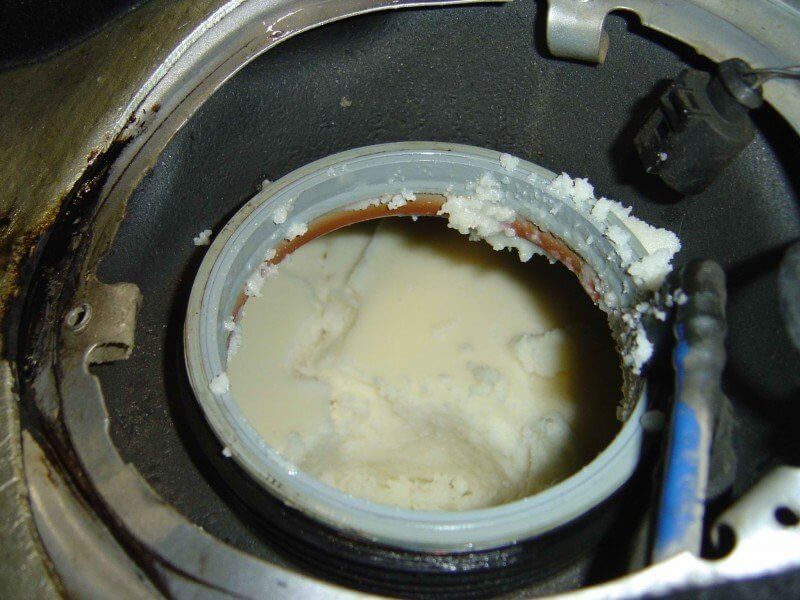
Truck Issues with Diesel Fuel Gelling
While diesel engines are famous for their durability, gelled diesel impacts how well your engine runs and how hard your fuel system pumps. Your truck can experience a handful of issues when your diesel gels:
- Wax crystals can clog the fuel filters and injectors, reducing fuel flow
- Fuel pumps struggle to move thickened fuel, increasing component wear
- Partial gelling degrades your truck performance with rougher idling and reduced engine power
- Engine can unexpectedly stall while driving due to the fuel tanks being further from the engine’s heat
(Source)
Diesel Gelling: Myths vs. Facts
Let’s debunk some diesel fuel gelling myths and let you know the true facts.
Myth: Diesel “freezes” like water.
Fact: Diesel doesn’t actually freeze solid the way water does. What happens is the wax molecules – naturally found in the oil – crystallize which then thickens the fuel and causes it to gel. This is different from water freezing in your fuel, but that could also freeze and contribute to blockages.
Myth: All diesel gels at 32 degrees fahrenheit.
Fact: Diesel can certainly begin to gel at higher temperatures (also known as the “cloud point”) but typically, it gels and clogs filters at around 10 to 15 degrees fahrenheit for standard No. 2 diesel without any additives. The exact temperature that diesel gels at depends on fuel composition, blends, and treatment. “For example, #2 diesel fuel has a cloud point that can range from -18 to 20 degrees Fahrenheit (-28 to -7 degrees Celsius). On the other hand, #1 diesel fuel can withstand temperatures as low as -40 degrees Fahrenheit (-40 degrees Celsius).” (Source)
Myth: Gasoline faces the same gelling problem as diesel.
Fact: Gasoline rarely gels in cold weather since it lacks the high paraffin content found in diesel fuel. Its chemical structure keeps it liquid at much lower temperatures.
Myth: Newer diesel engines are immune to fuel gelling.
Fact: Modern diesel engines are actually more often sensitive to fuel gelling because they use high-pressure common rail (HPCR) fuel systems with extremely tight tolerances. Even small amounts of wax crystallization or partial fuel filter blockages can interrupt fuel flow, leading to hard or no-start conditions.
How to Fix Diesel Fuel Gelling
Now that you know the facts, here are a few ways to stop diesel gelling before it happens:
1. Use Winter-Grade Diesel or Additives
Winter diesel blends have reduced gelling points that are specifically formulated to stay liquid in colder climates. Fuel suppliers often switch to these blends in cold seasons. If you’re not sure what you’re getting, we recommend using a diesel anti-gel additive before the temperature drops. These helpful additives lower the point at which wax crystals form to allow your fuel to flow smoothly. And don’t wait until it’s too late – it won’t help you if gelling has already begun.
“As long as #1 diesel or a winterized diesel blend is used during winter conditions, most fuel related winter problems can be avoided. However, encountering poor quality or unconditioned fuel is inevitable, so some precautions should be made when operating in cold weather.” (Source)
2. Keep Your Fuel Tank Full
Running low on fuel increases any condensation inside your fuel tank. Water in your truck’s fuel system can freeze, contributing to blockages caused by wax crystallization. Keeping your tank topped off reduces any airspace and moisture buildup.
3. Block, Fuel, and Espar Heaters are Helpful
Engine block heaters don’t heat diesel directly, but they keep the engine and surrounding components warmer which helps fuels stay fluid longer. Products like espar heaters, fuel heaters, or heated fuel filters are extremely effective at preventing any gelling in cold climates.
4. Don’t Rely on Idling to Prevent Gelling
Contrary to some beliefs, idling your engine doesn’t stop fuel gelling. It certainly can warm the engine, but not by much. Fuel temperatures, especially inside the tank, may still reach problematic levels without proper treatment or heating systems. If your diesel fuel has gelled and clogged your filters or lines, letting the temperature rise and “melt” your diesel may not fully resolve the issue. Wax crystals can stick to surfaces and require warming the gelled diesel with heaters or replacing filters entirely to restore maximum flow.
Preventing Diesel Fuel Gelling
Don’t be a victim of diesel fuel gelling – it can be prevented! By understanding why and how it happens, plus using the right prevention measures, you can make sure your truck can run at peak performance all winter long. From choosing the right blends and using additives to keeping your tank full and using block heaters, proactive winter preparation is far more effective than dealing with the issues when it’s too late.
Stay further prepared with our full guide of semi truck winter maintenance resources:
Winter Maintenance Tips for Truck Drivers
Winter Truck Maintenance: Winterizing Your Truck Inside and Out
Cold Weather Truck Maintenance
Get the Latest Trucking News, Tips & More
"*" indicates required fields