

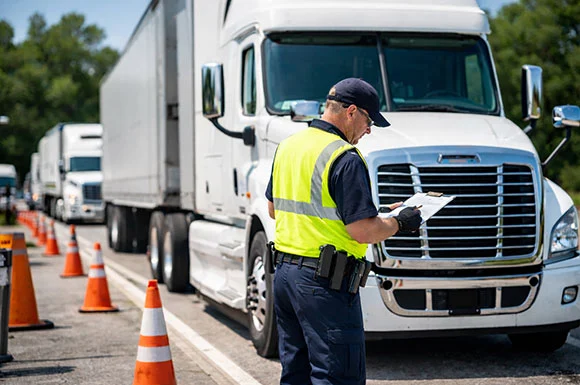
Keeping your truck in top condition is essential, not just for compliance standards, but to avoid violations and downtime. Each year, during the International Roadcheck, officers across the U.S., Mexico, and Canada conduct thousands of commercial vehicle inspections over a 72-hour period. Often averaging nearly 15 trucks per minute, roughly 18-23% of commercial motor vehicles inspected are placed out-of-service due to violations.
To help avoid fines and out-of-service orders, following these tips can keep you on the road while ensuring the safety of yourself, your cargo, and others on the road.
Roadcheck Inspection Tips
To help you prepare for this year’s CVSA International Roadcheck, here are a few steps you can take to stay violation-free:
- Perform a thorough pre-trip inspection to catch issues early.
- Check out our 9-point inspection checklist to get started.
- Make sure your truck is fully stocked with all required safety equipment. These essentials include:
- Fire extinguisher (charged and accessible)
- Reflective warning triangles
- Spare fuses
- Warning devices for stopped vehicles
(Source)
- Review all paperwork before each shift, making sure all information is complete, accurate, and legible. Documents should include:
- Permits (if applicable)
- Periodic inspection reports
- Daily vehicle inspection reports (if applicable)
- Record of Duty Status (RODS)
Not every vehicle will be selected for an inspection. If you do complete and pass a Level I without any violations, you’ll receive a CVSA decal sticker to display. This typically exempts your vehicle from another Level I inspection for up to three months.
CVSA Inspection Levels
Roadcheck inspections are generally conducted at weigh/inspection stations and mobile patrols to check and verify compliance with federal, state, provincial or territorial regulations. During the blitz, CVSA-certified law enforcement personnel focus on identifying key safety issues, including:
- Driver violations
- Out-of-service drivers
- Vehicle defects
- Out-of-service vehicles
While there are eight levels of inspection, the International Roadcheck commonly performs Level I and Level II inspections.
Level I – North American Standard Inspection
The Level I inspection is the most thorough roadside check, covering both the driver and vehicle to assure full compliance with safety regulations. Inspectors review driver credentials, hours of service, and overall driver qualification records. They also perform a detailed check of the vehicle’s most critical systems and components that impact safety and performance.
Level II – Walk-Around Driver/Vehicle Inspection
The Level II inspection, also known as a walk-around inspection, includes many of the same checks as a Level I, just without going underneath the vehicle. Inspectors review both driver credentials and key vehicle components that can be examined from the outside to ensure full compliance and safe operation.
CVSA Level I vs. Level II Inspection Comparison
| Category | Level I Inspection | Level II Inspection |
|---|---|---|
| Inspection Type | Full driver + vehicle inspection | Driver + walk-around vehicle inspection |
| Under-Vehicle Inspection | Yes | No |
| Driver Credentials | License, Medical Card, SPE (if applicable), HOS, RODS, seat belt, drug & alcohol compliance | Same as Level I |
| Brake Inspection | Full inspection, including undercarriage components | Visible components only |
| Vehicle Components Checked | Comprehensive: Brakes, suspension, frame, etc. | Same components, but only what’s externally visible |
| Cargo Securement | Yes | Yes |
| Lighting Systems | Yes | Yes |
| Tires, Wheels, Rims | Yes | Yes |
| Passenger Vehicle Checks | Emergency Exits, electrical systems, seating | Same as Level I (externally accessible only) |
| HM/DG Inspections | Conducted by certified inspectors | Same requirement |
| Time & Thoroughness | More time-intensive and detailed | Faster, less invasive |
Check out the CVSA’s website for All Inspection Levels.
How to Avoid Violations During CVSA Roadcheck
Both inspections can still place your vehicle out-of-service if any violations are found. That’s why proper, proactive preparation is essential. Even minor issues can lead to delays, fines, or downtime.
During the International Roadcheck, enforcement activity significantly increases, which makes preparing ahead of each journey even more important. Staying proactive with pre-trip inspections and maintenance can help you reduce risks and keep your day-to-day running safely and efficiently.
Get the Latest Trucking News, Tips & More
"*" indicates required fields