


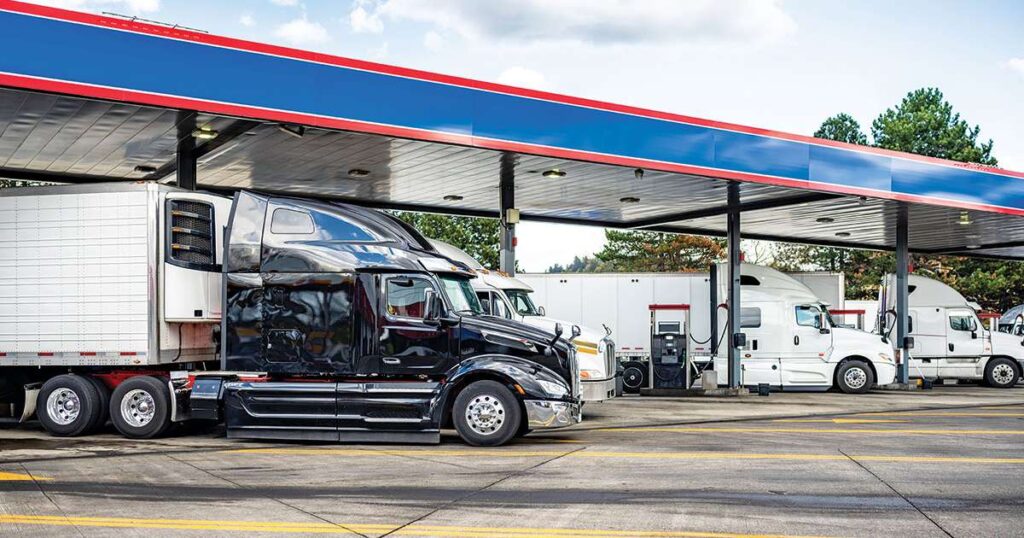
Fuel impacts every part of a trucking business, from the miles you travel to the money you earn. While fleets today have more alternative fuel options than ever before, diesel remains the best fuel for commercial trucks. Its combination of fuel efficiency, low-end torque, range, nationwide infrastructure, and long-term engine durability makes diesel the most practical and profitable fuel choice for the vast majority of fleets across the industry.
In this blog, we’re breaking down exactly why diesel is the best truck fuel, how it can save your fleet money, and why it’ll keep you on the road.
Why Diesel is the Best Fuel for Heavy-Duty Trucks
Diesel engines are made specifically for the demands of heavy-duty commercial work: high mileage, heavy payloads, and prolonged performance over thousands of miles. No alternative fuel currently matches diesel’s combination of its advantages.
- Strong pulling power for heavy cargo
- Better fuel economy per mile
- Longer range between fuel stops
- Nationwide fueling infrastructure
- Great durability under high mileage
Despite the continued evolution of electric vehicles and biodiesel fuel options, the majority of heavy-duty trucks sold today are powered by diesel engines.
5 Advantages of Diesel Fuel for Commercial Trucks
Diesel stands out as the best truck fuel because it delivers what trucking depends on most: reliability, efficiency, and uptime. Unlike other fuel types that are limited by infrastructure, range, or specific job applications, diesel performs consistently across nearly every segment of the trucking industry. Here are five advantages that matter most to your business and profitability.
1. More Miles, Less Downtime
Depending on tank size and day-to-day operations, a Class 8 diesel truck can travel over 2,000 miles between fuel stops. A typical 120-150 gallon tank and an average fuel economy of 6-8 MPG makes diesel the most operationally efficient choice for long-haul and regional trucking applications. Plus, it delivers more energy per gallon than gasoline or compressed natural gas. Fewer fuel stops means more productive hours on the road and less money drained from your wallet.
2. Better Fuel Economy Means Lower Cost Per Mile
Fuel economy is one of the most important factors when it comes to profitability. Diesel consistently outperforms alternative fuels on a cost-per-mile basis. Even the smallest, modest improvements in MPG produce significant annual savings long-term.
According to operational cost benchmarks from the American Transportation Research Institute (ATRI) and efficiency data from NACFE, a typical long-haul tractor averaging 120,000 miles per year can expect over $5,000 in annual savings from a modest 0.5 MPG improvement, calculated using current U.S. EIA diesel cost averages.
Currently spending too much on fuel? We’ve got 5 tips that will save you thousands!
3. Low-End Torque Reduces Repair Costs
Diesel engines produce their maximum torque at low revolutions per minute (RPM), typically between 1,000 and 1,600 RPM. For commercial trucks, this makes hauling heavy loads uphill, through job sites, and on stop-and-go highway conditions significantly easier and less stressful on your components.
Less engine and drivetrain strain directly correlates to fewer strain-related repairs, longer intervals between major services, and more predictable maintenance costs. For businesses managing tight maintenance budgets, this matters more than many operators realize when projecting your total cost of ownership.
4. High-Mileage Diesel Engine Longevity
Diesel engines are specifically built for the demands of trucking, and their proven longevity reflects that. A well-maintained diesel engine can last anywhere from 500,000 to over 1,000,000 miles, which is often 2-3 times the lifespan of a comparable gasoline engine under similar conditions.
Over time, that kind of durability helps reduce breakdowns, cut maintenance needs, and delay the expense of replacing your truck.
5. Stronger Resale Value Lowers Total Cost of Ownership
Another major advantage of diesel-powered trucks is their ability to retain their value over time. Because diesel engines are built for longevity and remain in high demand across the trucking industry, used diesel trucks often have a higher resale value compared to alternative-fuel vehicles at the same mileage.
For fleets and owner-operators, this can improve your total cost of ownership resulting in better trade-in values and stronger collateral for financing, among other reasons.
Diesel vs. Alternative Fuels
While alternative fuels continue to improve, diesel currently provides the best overall balance of range, performance, infrastructure, and flexibility for most trucking applications. Here’s how the leading fuel types compare across the factors that matter most to drivers, fleets, and owner-operators:
| FACTOR | DIESEL | ELECTRIC | NATURAL GAS |
|---|---|---|---|
| Range | 1,500-2,000 mi. | 150-400 mi. | 500-1,000 mi. |
| Fueling Infrastructure | Nationwide | Growing but limited | Limited |
| Heavy-Haul Performance | Excellent | Improving but weight penalties exist | Moderate |
| Refueling Time | Minutes | 1-4+ hours | Longer than diesel |
| Long-Haul Stability | Excellent | Limited on many routes | Limited |
| Resale Value | Strong, established market | Uncertain, evolving | Smaller secondary market |
How Much Money Can Diesel Save Per Year?
It’s easy to look at a minor fuel economy improvement and dismiss it as a drop in the bucket. A difference of just 0.5 MPG may seem minor on paper, but across a full year, the financial impact can be substantial. According to data from ATRI, fuel represents 24% to 28% of total fleet operating costs – the single highest variable expense in the industry.
Let’s put those annual savings into perspective:
The scenario assumes a standard highway duty cycle of 120,000 miles per year at a baseline diesel cost of $4.00 per gallon.
| Fuel Efficiency | Annual Gallons Consumed | Annual Fuel Cost |
| 6.5 MPG | 18,462 gallons | $73,846 |
| 7.0 MPG | 17,143 gallons | $68,571 |
| The Difference | 1,319 gallons saved | $5,275 saved per year |
*Scenario generated by AI
If a single truck saves $5,275 a year, a small fleet of 10 trucks saves $52,750 annually. That is pure profit that can be directly put straight back into your business.
Diesel: Still the Best Fuel for Heavy-Duty Trucks
Diesel remains the best overall fuel for heavy-duty trucks because of its strong performance, infrastructure availability, and long-term value. Combined with modern fuel-saving technologies and Kenworth’s engineering advancements, today’s diesel trucks are delivering more value per gallon than ever before.
Ready to find the right diesel truck for your operation? Browse our current inventory or contact our team at Coopersburg & Liberty Kenworth to discuss your vehicle options and financing.