

Your truck’s engine aftertreatment system plays a critical role in reducing emissions and keeping compliant with environmental regulations.
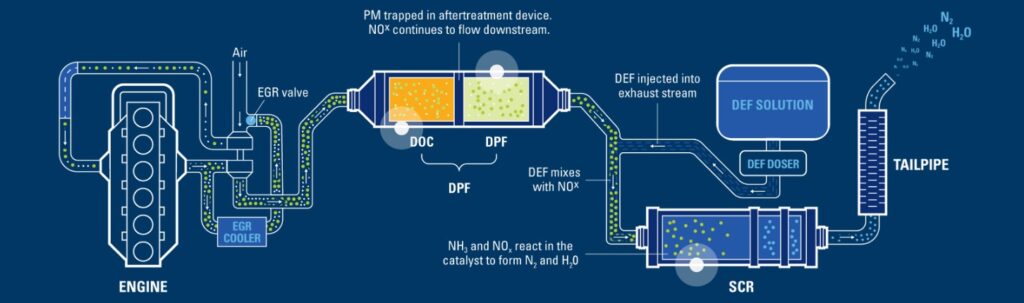
Today’s Engine Aftertreatment Systems (EATS) combine several components, including the diesel oxidation catalyst (DOC), diesel particulate filter (DPF), selective catalytic reduction (SCR) system, diesel exhaust fluid (DEF) system, as well as various sensors.
For truck drivers and fleet operators, staying on top of aftertreatment maintenance helps improve fuel economy, keep your truck running reliably, maintains emissions compliance, and helps prevent costly repairs and unexpected downtime.
Common Aftertreatment Problems
Aftertreatment system problem detected? Regeneration, exhaust temperature, duty cycle, DEF quality, sensors, and routine maintenance all affect how well your aftertreatment system performs.
Here are some common aftertreatment system issues, causes, and how to address them.
DPF Clogging & Regeneration
The diesel particulate filter (DPF) traps soot from the exhaust and burns it off through regeneration. If your truck cannot properly complete regeneration, soot will accumulate in the filter, thus increasing backpressure and potentially affecting engine performance.
Short trips, excessive idling, and low-load operations can make it harder for the exhaust system to reach the temperatures needed for effective regeneration. If your truck requests a regeneration, follow the manufacturer’s instructions and allow the process to finish when it’s safe to do so. Repeatedly interrupting regenerations or ignoring DPF warnings can lead to more serious problems down the road. Additionally, be sure to follow the vehicle’s instructions for both automatic and parked regeneration.
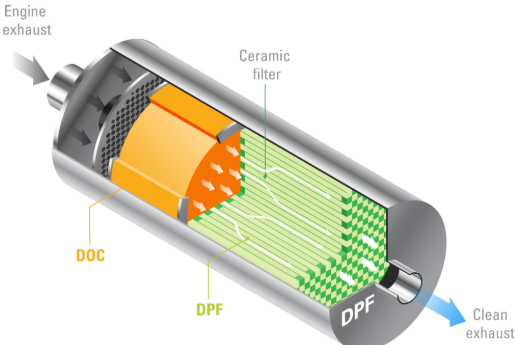
Note: It’s important to remember that while regeneration burns soot, it does not remove the ash that accumulates in the DPF over time.
DOC Issues
The diesel oxidation catalyst (DOC) is the first component that exhaust passes through. It converts carbon monoxide and unburned hydrocarbons into less harmful compounds, then generates the heat needed for the DPF to burn off soot during regeneration.
A contaminated or damaged DOC can make it harder to reach regeneration temperatures. This can lead to more frequent regeneration requests and soot buildup in the DPF. If your truck is struggling to regenerate, have a technician check the DOC along with the DPF and sensors. They will make sure to fix any underlying leak or fueling issues so the problem doesn’t return.
Sensor Failures
Modern aftertreatment systems rely on NOx, temperature, pressure, and other sensors to monitor performance and control emissions. When a sensor fails, it can trigger warning lights or fault codes in your vehicle, even if the DPF isn’t clogged. If those warnings keep recurring, have the system properly diagnosed rather than repeatedly clearing the codes.
DEF Quality
DEF is essential to the SCR system, and using poor-quality or contaminated DEF can cause emissions-system issues.
- Always use DEF that meets ISO 22241 or API-certified DEF standards.
- Check the manufacture date and shelf life.
- Inspect DEF for discoloration, cloudiness, or visible contaminants before use.
- Store DEF in a cool, dry place away from direct sunlight and excessive heat.
For more tips on handling DEF throughout the year, check out our guide to DEF storage, handling, and seasonal tips.
EGR Problems
While the exhaust gas recirculation (EGR) system is separate from the DPF and SCR systems, it still affects emissions and engine performance. Over time, carbon buildup or a faulty EGR valve can cause performance issues, so be sure to follow the engine manufacturer’s maintenance recommendations to keep all systems running smoothly.
When Should You Perform Aftertreatment Maintenance?
Fall is a good time to inspect your aftertreatment system, particularly if your truck operates in cold climates. Taking care of aftertreatment maintenance in autumn can help you catch potential issues before tougher winter driving conditions arrive.
Your fall inspection should include:
- DPF inspection or cleaning, as recommended by the engine manufacturer.
- Regeneration system inspection.
- DOC inspection and temperature sensor checks.
- DEF filter inspection or replacement according to OEM maintenance intervals.
- DEF quality and contamination checks.
- DEF heaters, lines, and related components checked before winter.
- NOx, temperature, and differential-pressure sensor checks.
Spring is another good time for an inspection, especially if your truck experienced frequent regeneration requests or aftertreatment warnings throughout the winter.
How to Help Prevent Aftertreatment Problems
There are a few habits you can follow to help keep your aftertreatment system in good condition:
- Limit excessive idling.
- Avoid repeated short trips when possible.
- Run the engine hot and hard to allow passive regeneration.
- Always use the correct engine oil and maintenance fluids.
- Always use clean, specification-compliant DEF.
- Follow the engine manufacturer’s recommended maintenance service.
- Pay attention to dashboard warnings and fault messages.
- Have recurring or worsening warnings diagnosed by a technician.
Ideal operating conditions vary depending on truck model and usage. Rather than following a one-size-fits-all rule for revolutions per minute (RPM), speed, or engine load, stick to the operating recommendations for your specific engine.
Aftertreatment Maintenance for Semi Trucks
Aftertreatment maintenance is something every truck driver needs to stay on top of. DPFs, DEF, SCR systems, sensors, and regeneration all play an important role in keeping today’s diesel trucks operating efficiently.
Whether you’re getting your truck ready for winter or just looking to keep it performing its best, a little preventative maintenance can go a long way toward protecting your investment and staying on the road.
Get the Latest Trucking News, Tips & More
"*" indicates required fields