

Kenworth W900B Specs, History & Features
Introduced in 1982 as the successor to the Kenworth W900A, the W900B continued the tradition of long-nose conventional design while introducing updated styling, improved engineering, and a more modernized appearance.
Built for demanding applications like heavy-haul, flatbed, tanker, and long-distance trucking, the W900B laid the groundwork for future W900 models while preserving its reputation as a Class 8 workhorse.
Kenworth W900B Specifications
The Kenworth W900B was made to be highly customizable for fleet owners and operators to configure the chassis, drivetrain, and components to meet the demands of different industries.
Engine & Powertrain Options
Cummins X15: 500 to 605 horsepower, up to 2,050 lb-ft of torque
PACCAR MX-13: 405 to 565 horsepower
Transmissions: Eaton-Fuller 10-, 13-, or 18-speed manual
Axle & Weight Ratings
Front Axle Capacity: 12,000 lbs up to 20,000 lbs (heavy haul)
Rear Axle Capacity: Tandem ratings from 40,000 lbs to 46,000+ lbs
Kenworth W900B Features
Classic Long-Nose Appearance
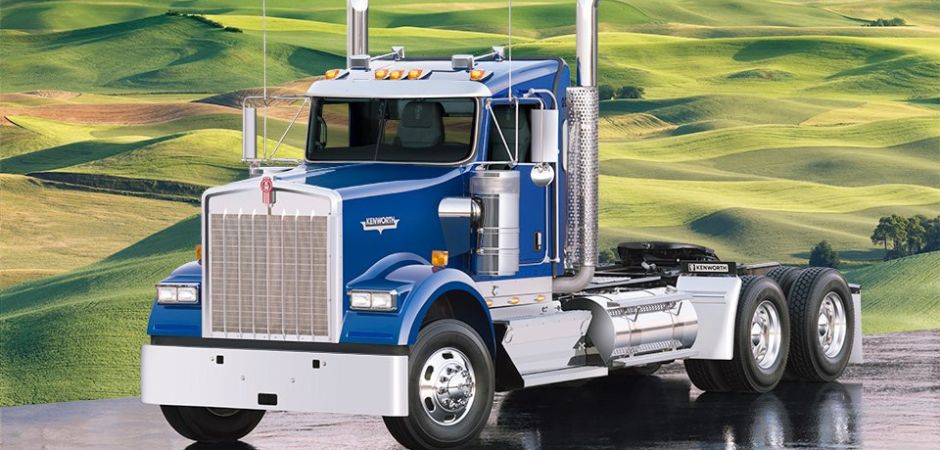
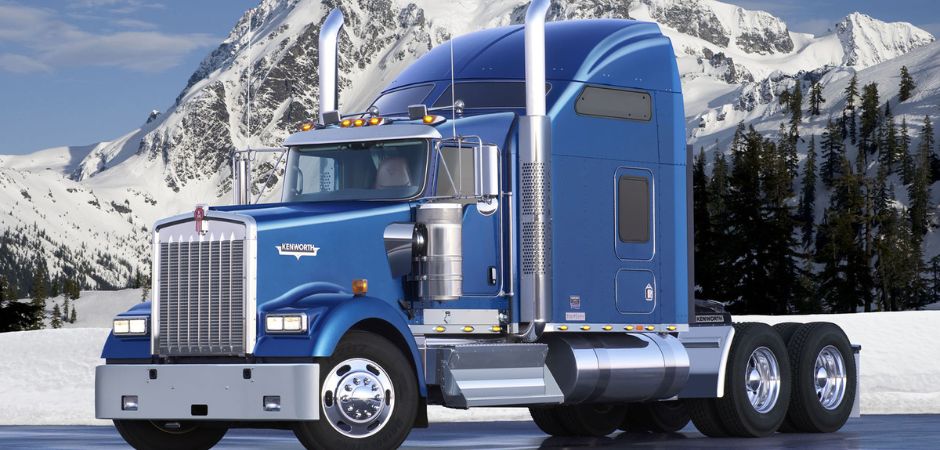
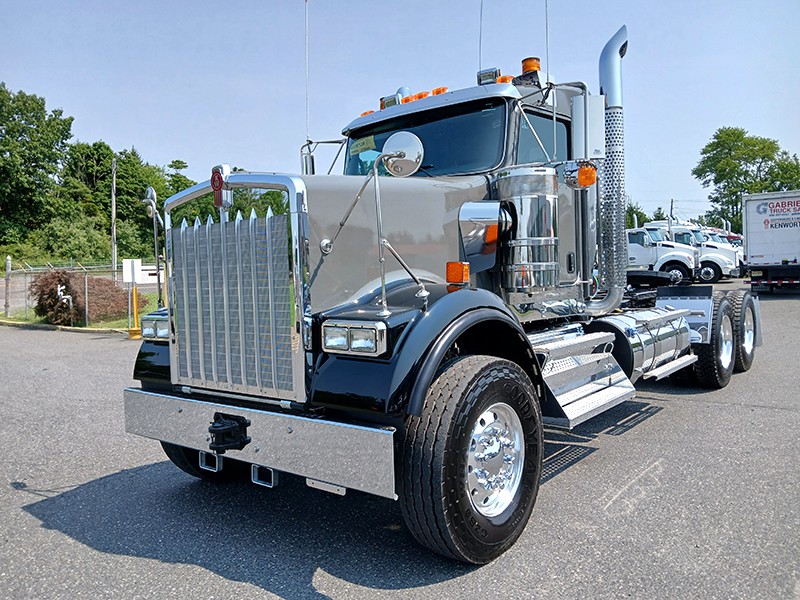
The Kenworth W900B quickly became one of the most recognizable trucks in the industry, thanks to its iconic long-nose conventional appearance. With its raised hood and flat windshield, the W900B combined Kenworth’s classic styling with bold features. Exterior features included:
- Chrome and aluminum details including dual exhaust stacks, fuel tanks, stainless steel trim, and other brightwork options
- A radiator cowl with customizable grille options, including louvered and stainless steel punch grilles
- Signature rectangular headlights on each side of the wide hood, which separated it from previous W900 models
- A split flat-glass windshield
Heavy-Duty Performance
Throughout its production, the W900B was available with a variety of powerful diesel engines and heavy-duty components equipped to handle the most challenging workloads of the industry. Standout performance features included:
- Heat-treated, high-tensile steel frame rails
- Multiple engine options from Cummins, Caterpillar, and Detroit
- Heavy-duty drivetrain components
- A larger radiator and improved cooling system to manage engine temperatures
Driver-Focused Cab Design
The W900B’s spacious cab layout provided both a functional and comfortable work area for drivers who spent long shifts on the road. Interior features of the Kenworth W900B included:
- 86-inch Studio AeroCab
- A wide cab with additional room and flexibility
- Large side windows and the traditional flat windshield for improved visibility
- Easy-to-read instrument panels with durable gauges and controls
- Available options included premium Diamond VIT and Splendor trims
- Various sleeper configurations
- 38-inch and 42-inch flat tops
- 62-inch and 72-inch AeroCab/Aerodyne
W900 Series Legacy
The Kenworth W900B played an important role in the history of the W900 series and helped define the classic design of long-nose conventional trucks. Building upon the success of the W900A, the W900B introduced new styling and engineering improvements while still preserving the traditional W900 appearance drivers loved.
Later models like the Kenworth W900L carried forward many of the design elements that made the W900B famous. Today, it remains highly sought after by collectors, owner-operators, and others who value its simplicity, style, and reliability.
Kenworth W900B Chassis & Application Versatility
The Kenworth W900B was built on a durable chassis that could be configured for a wide range of applications. With multiple drivetrain, axle, suspension, and body options, this model could be customized to meet the demands of virtually any commercial trucking application.
Common W900B applications included:
- Flatbed
- Heavy haul
- Logging
- Livestock
- Lowboy
- Tanker
- Owner-operator
- Regional haul
The W900B’s versatility, strength, and customization options helped make it one of the most sought-after conventional trucks that dominated the industry.
Kenworth W900B FAQs
What is the difference between a W900B and W900L?
The main difference between the Kenworth W900B and W900L is the hood length. The W900B uses the standard W900 hood configuration, while the W900L features an extended hood that increases the truck’s bumper-to-back-of-cab (BBC) length to about 130 inches. The W900L was first introduced in 1990 as a longer-hood version of the W900B, which eventually became one of Kenworth’s most recognizable conventional trucks in their lineup.
Is the Kenworth W900B still being made?
Kenworth has announced the W900B will be discontinued as part of the phase-out of its legacy conventional truck lineup. Production timing has evolved over time, so availability may vary. Contact your local Kenworth dealer for the latest information on new truck availability.
What replaced the Kenworth W900B?
The Kenworth W990 is generally considered the modern successor to the W900B, particularly for highway and heavy-haul applications.
W900B
This historical model is the perfect balance between tradition and progress. Tough, customizable, and superbly crafted, the Kenworth W900B stands the test of time. That’s why drivers still want this model, even after all these years. Whether it’s an original or restored, the W900B keeps the industry alive and proves that Kenworth trucks are built to last.
Discover more models in the W900 Series:
Kenworth W900
Kenworth W900L
Kenworth W990
Want more info about the Kenworth W900B?
Request pricing, or speak with a truck specialist today:
Download Kenworth W900 Truck Brochure
Descargar folleto del camión Kenworth W900